Rendering APIs
The page. Not what is covering it.
Rendering APIs that remove consent walls, sign-in modals and paywall overlays before they capture — or before they read. Screenshots, PDFs, markdown, link-preview metadata and structured JSON, on one key and one quota. We measured the gap most APIs do not quote: 93% of renders succeed, 69% are usable.
Type any URL. Watch the wall come off.
Left is the page as it loads. Right is what the API returns. No signup, no key, no card.
That is one product. There are five, on one key — see them all.
Five outputs, one account
Same browser, same page, same overlay suppression — only the last step differs. One key, one quota, one subscription, and every call costs one render whichever of them you use.
Screenshot API
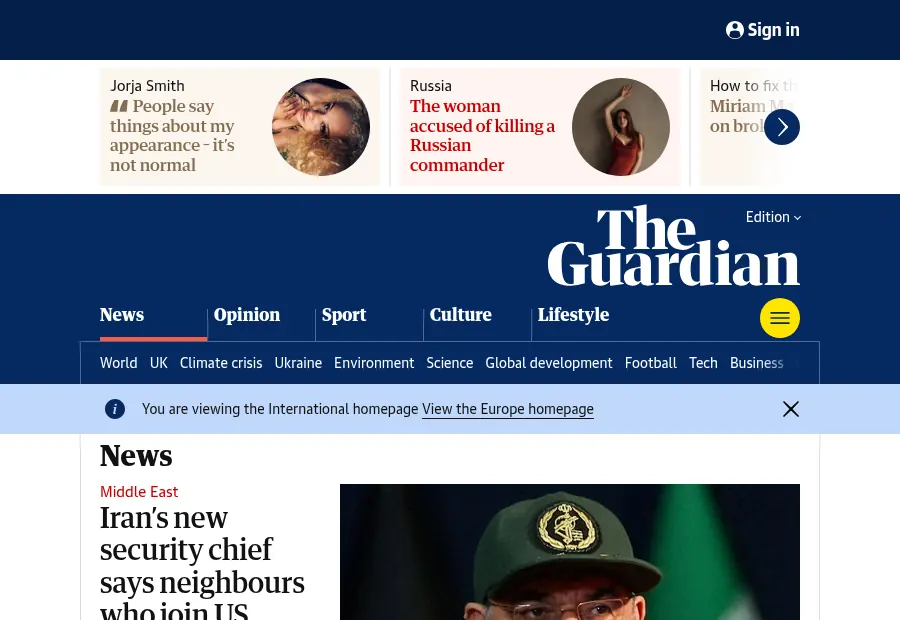
Screenshots of the page. Not the cookie banner.
PNG, JPEG or WebP of any page, with whatever was covering it taken off first. Viewport or full page, retina, dark mode, signed URLs you can drop straight into an img tag.
POST /v1/render
→ image/png
93% succeed · 69% usable · ~2s median
HTML to PDF API
PDFs of the page. Not the cookie banner.
The same page printed rather than photographed. A3 through tabloid, landscape, margins, scale, page ranges and page numbers — on the key and the allowance you already have.
POST /v1/pdf
→ application/pdf
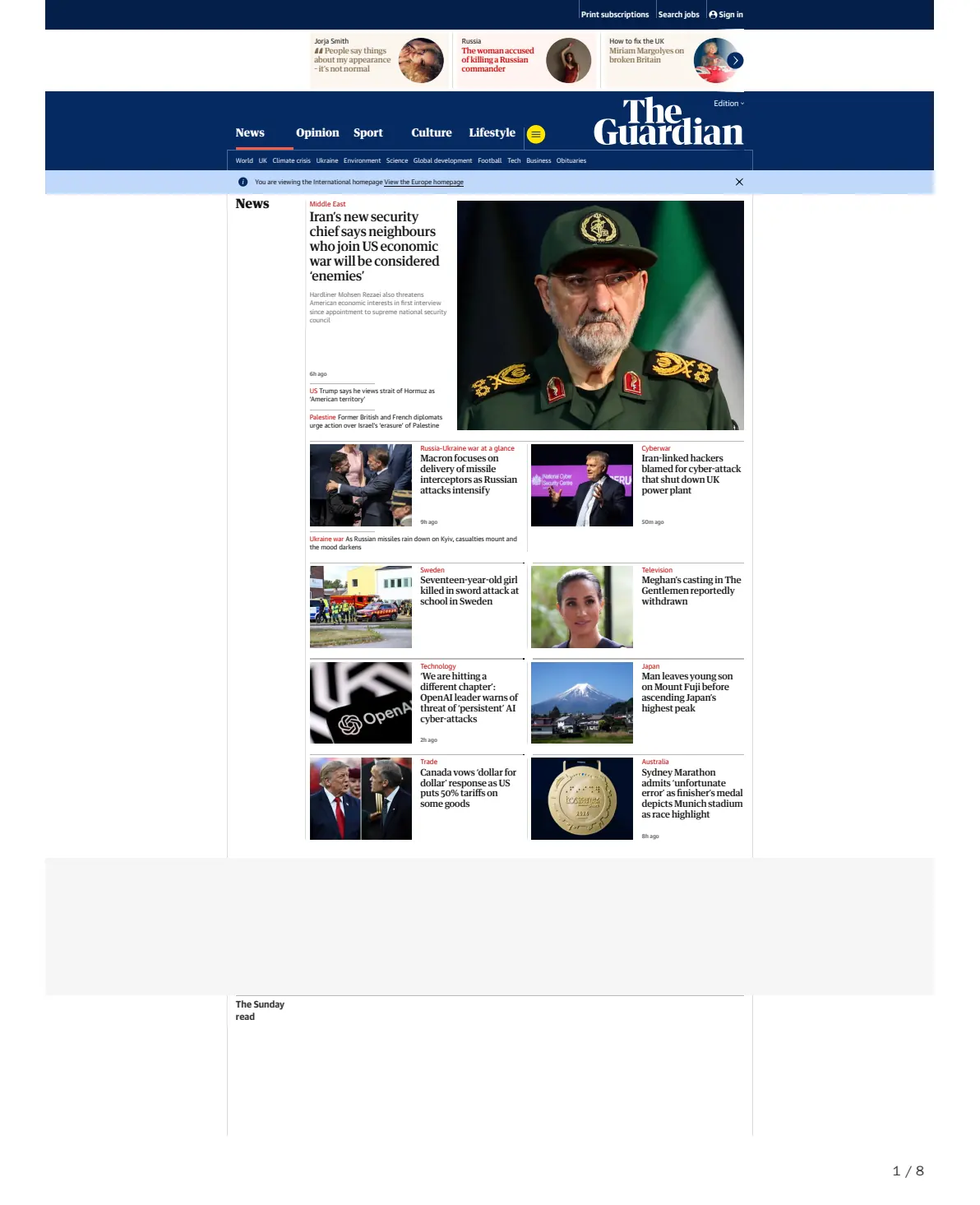
theguardian.com: 1 page with the wall, 22 without
 1 / 8
1 / 8
URL to Markdown API
The article. Not the article plus a cookie policy.
Clean markdown from a rendered page: headings, lists, tables, code fences and absolute links. Article body by default, whole document on request, or raw text/markdown straight down a pipe.
POST /v1/markdown
→ text/markdown
zoom.com: 51 consent fragments from a leading rival, 0 from us
Link Preview API
Previews that are right on sites that render themselves.
Title, description, preview image with dimensions, canonical URL, icons, feeds, oEmbed, author and dates — resolved absolute, in one call, on the key you already have.
POST /v1/metadata
→ application/json
Reads the tags JavaScript wrote, not the ones the server sent
HTML to JSON API
Structured data, without a model in the loop.
Give it a selector map and get exactly those fields, with numbers parsed and links absolute. Give it nothing and get the page's own JSON-LD, microdata and OpenGraph.
POST /v1/json
→ application/json
Mechanical: no model, no GPU, no inference bill in your price
Built for agents, not just for people
An agent that can see a page is more useful than one that cannot — and one that can read a page without the cookie policy riding along is more useful still. Everything needed to discover and call all five products without a wrapper:
/openapi.jsonOpenAPI 3.1, all five endpoints/llms.txtplain-language summary for models/index.mdthis site as markdown/.well-known/api-catalogRFC 9727 catalog/.well-known/mcp/server-card.jsonMCP card —render_url,render_pdf,read_page,page_metadata,extract_data/.well-known/ai-catalog.jsonARD capability manifest/.well-known/agent-skills/index.jsonAgent Skills index
Ask any page for Accept: text/markdown and you get
the markdown rather than the chrome. An agent driving a browser that
supports WebMCP finds a render_url tool on this site without
needing a key at all.
Pricing
Cached renders are free and never count against your quota. They cost us a disk read, so charging for them twice would be charging for nothing. One plan covers all five products — a screenshot, a PDF, a markdown extract, a metadata lookup and a JSON extraction each cost one render against the same allowance.
Free
$0forever
100 / month
- Viewport capture
- PNG, JPEG, WebP
- Overlay removal
- Signed URLs
- 24-hour cache
Starter
$9.99/ month
3,000 / month
- Everything in Free
- base64 / JSON response
- 7-day cache
- Retina (2x) output
- Email support
Growth
$39.99/ month
20,000 / month
- Everything in Starter
- 30-day cache
- Higher concurrency
- Priority queue
- MCP server access
Scale
$99/ month
75,000 / month
- Everything in Growth
- Full-page capture
- 4K and 3x output
- Overage at $0.001 / render
- Self-hosted option
Already subscribed? Manage your plan or cancel — no key needed, Stripe emails you a link.
Questions
What makes this different from other screenshot APIs?
Most of them return the page with the cookie banner still on it. We benchmarked a 29-URL corpus: 93% of renders technically succeeded, but only 69% were images you could actually use. Seven were ruined by consent overlays and exactly one by bot protection. Rendershed treats that gap as the product.
Does it click “Accept all” on cookie banners?
Never. It either declines, where a genuine reject control exists, or it hides the banner cosmetically, which consents to nothing. Reject buttons that actually lead to a paid subscription are detected and skipped.
Can it screenshot pages behind bot protection?
Sometimes, and we do not claim otherwise. We measured headless, stealth and headful browsers from both residential and datacenter addresses: the browser makes no difference, the IP makes some, and a small number of sites are simply not renderable. Those return an error rather than an image of a challenge page.
How do I use it in an <img> tag?
Mint a signed URL with POST /v1/sign and use it as the src. The signature covers every parameter, so the URL cannot be edited into a different render, and your API key never reaches the browser.
Is there an MCP server?
Yes. Rendershed exposes an MCP server so an AI agent can render a page and look at it as part of a task, plus an OpenAPI description and llms.txt for discovery.
Can it produce PDFs as well as images?
Yes, at POST /v1/pdf, and it runs on the same key, the same plan and the same monthly allowance — one PDF costs one render, and there is no separate PDF subscription. Overlay removal matters more for PDF than for images: a consent wall locks page scrolling, so the printable document stops at the fold. We measured theguardian.com printing as one page with the wall in place and twenty-two pages with it removed.
Do I need an API key to start?
No. Calls without a key run on an anonymous tier of 40 renders an hour, metered against your address, so the examples on this page work when pasted. A free key raises that to 100 a month from anywhere; paid plans run $9.99 for 3,000, $39.99 for 20,000 and $99 for 75,000. Cached renders are free at every tier and never count against a quota.